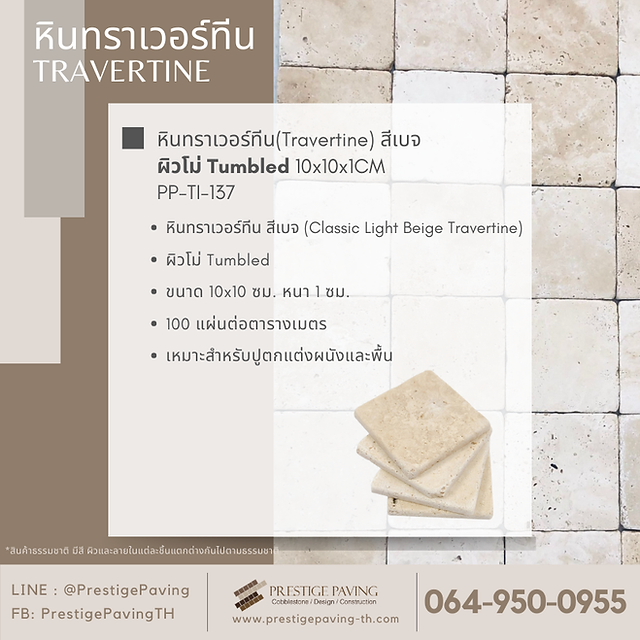
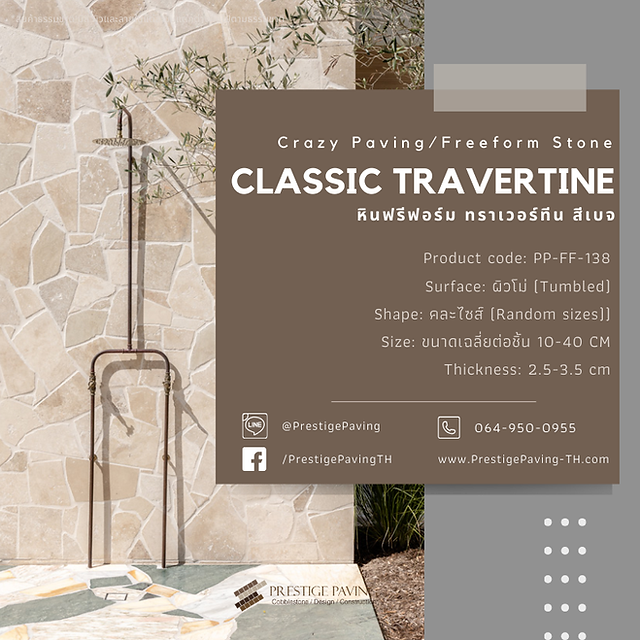
Travertine Paving: Timeless Natural Stone for Elegant Outdoor Spaces

Travertine has been used in architecture for centuries, particularly in Europe and around the Mediterranean. Its warm colours, natural patterns, soft texture, and characteristic pores give it a distinctive appearance that becomes even more attractive as it ages.
Today, travertine remains a popular choice for courtyards, patios, terraces, walkways, pool surrounds, gardens, villas, and resorts. It works especially well in designs that aim for a natural, relaxed, and timeless atmosphere.
What Is Travertine?
Travertine is a type of natural limestone formed by the deposition of calcium carbonate from mineral-rich groundwater, often around springs and hot springs. During its formation, gases, minerals, and organic materials can create small cavities and layers within the stone. These become the natural holes, veins, and variations that are characteristic of travertine.
Unlike manufactured paving materials, every piece of travertine can have slightly different colours, patterns, pores, and textures. This natural variation is one of its main attractions.

Typical Characteristics of Travertine
Warm colours such as cream, beige, ivory and light brown
Natural variation from piece to piece
Characteristic pores and small holes
Available in several surface finishes
Can be used for both interior and exterior applications when appropriately selected
Develops a natural, aged character over time

Why Is Travertine Popular for Paving?
Naturally Timeless Appearance: Travertine works well with both traditional and contemporary architecture. Its natural colours and textures can create an aged, elegant appearance without looking artificial.
Each Installation Looks Unique: Travertine is a natural stone; no two pieces are exactly alike. Subtle differences in colour, veining, pores, and texture create a surface with natural depth rather than a repetitive manufactured pattern.
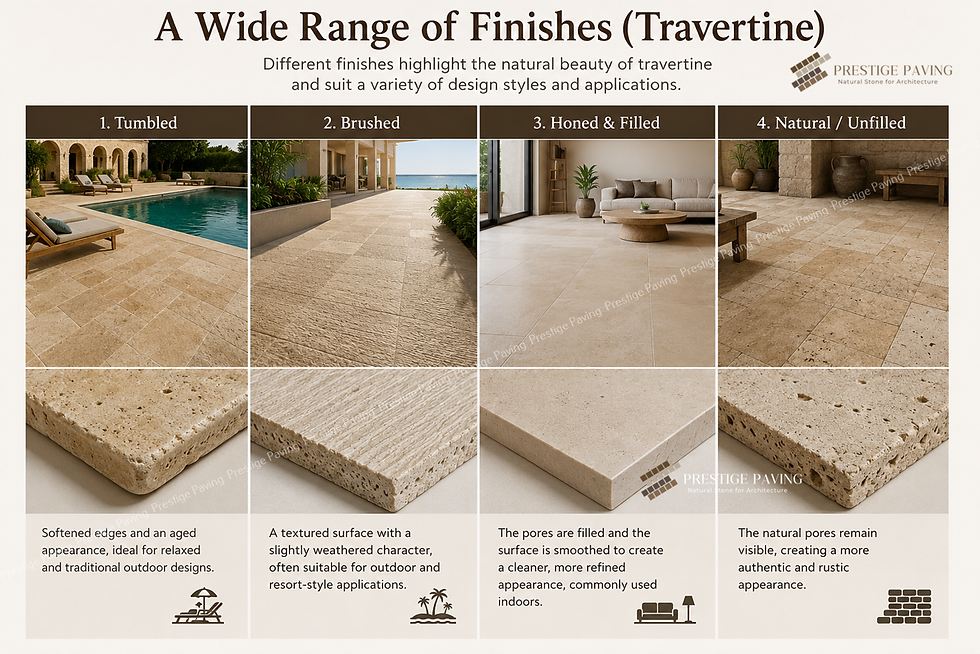
Suitable for Many Outdoor Areas: Depending on the stone's characteristics, thickness, finish, and installation system, travertine can be used for:
Patios and terraces
Garden walkways
Courtyards
Pool surrounds
Outdoor seating areas
Villa entrances
Resort landscaping
Interior floors and feature areas

A Wide Range of Finishes
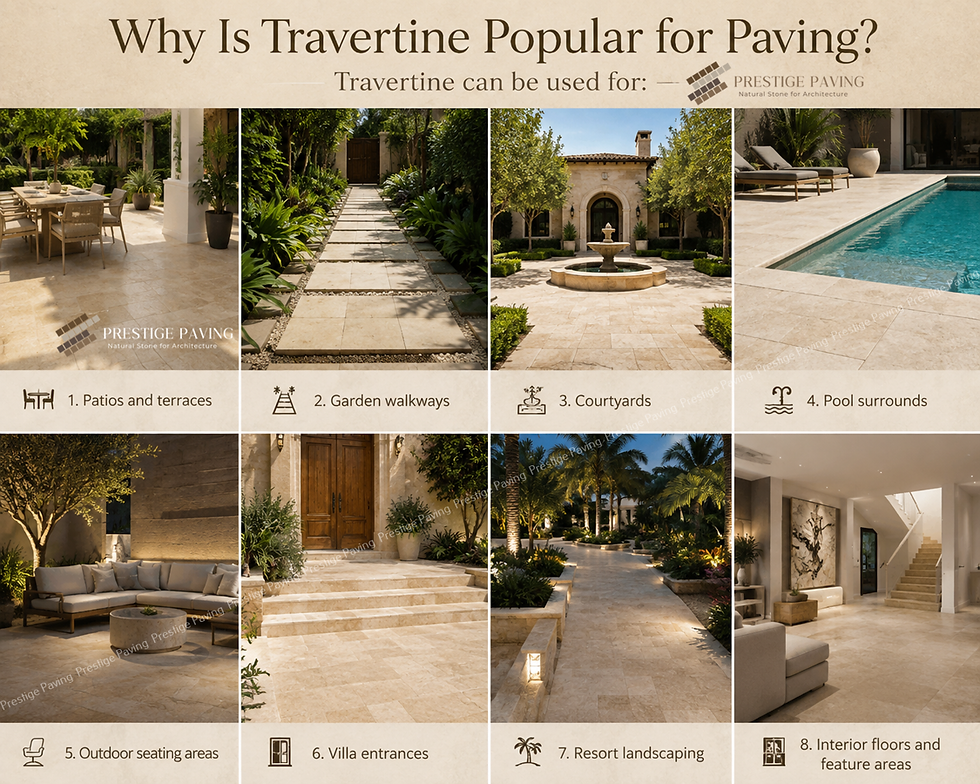
One of the advantages of travertine is the variety of finishes available. The finish can significantly change both the appearance and practical performance of the stone.
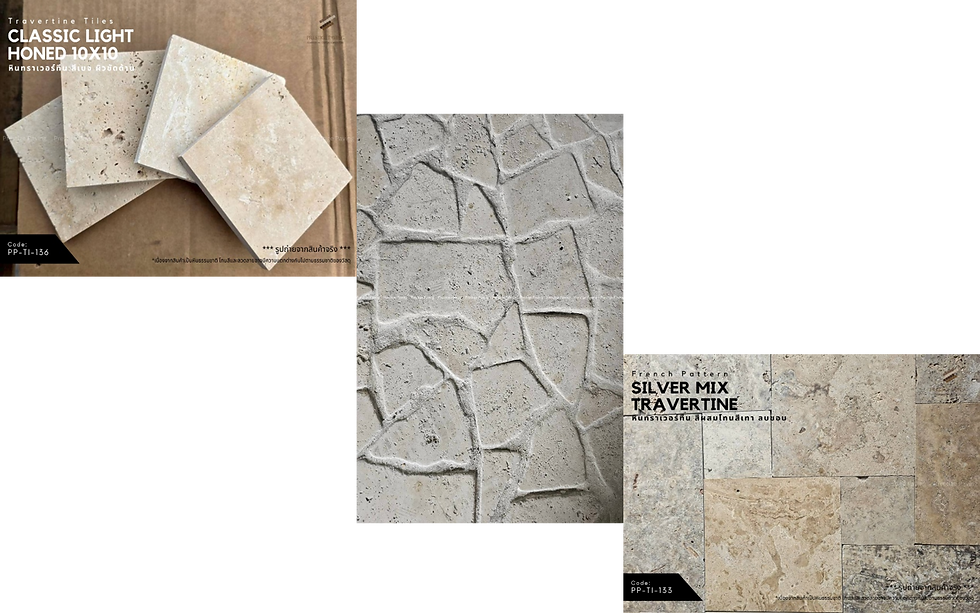
Tumbled – Softened edges and an aged appearance, ideal for relaxed and traditional outdoor designs.
Brushed – A textured surface with a slightly weathered character, often suitable for outdoor and resort-style applications.
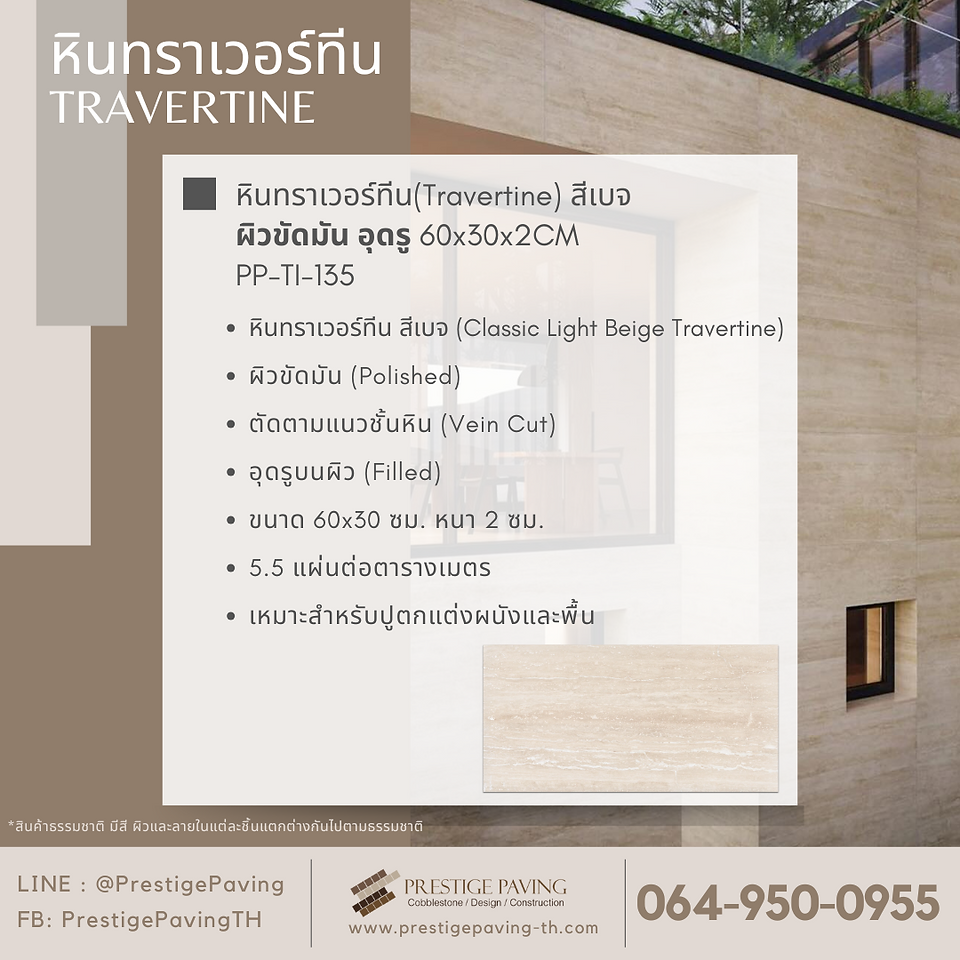
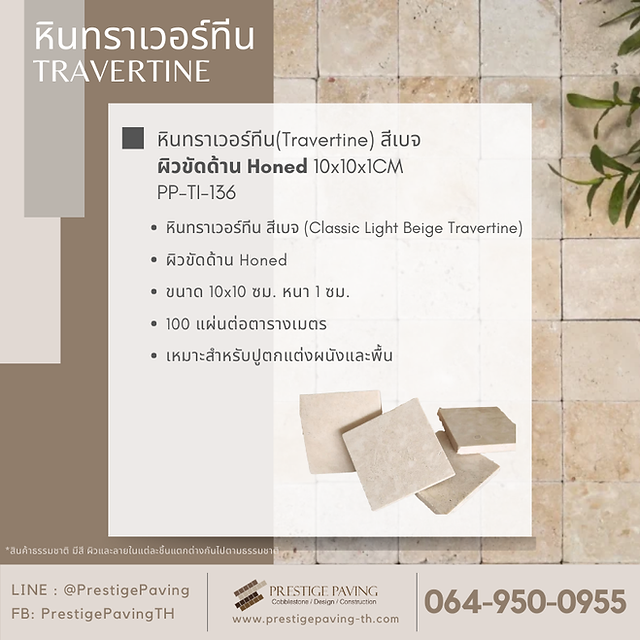
Honed & Filled – The pores are filled and the surface is smoothed to create a cleaner, more refined appearance, commonly used indoors.
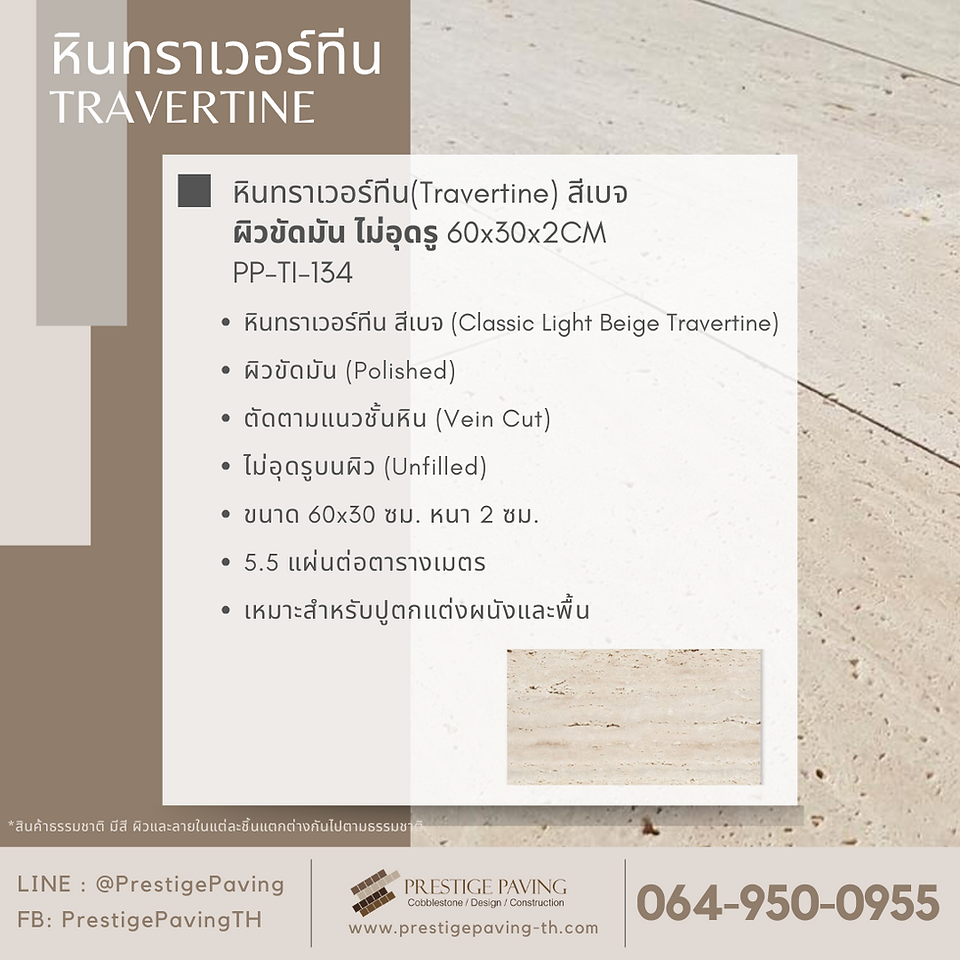
Natural / Unfilled – The natural pores remain visible, creating a more authentic and rustic appearance.
For outdoor paving, the surface finish should be selected according to the level of texture, water exposure, cleaning requirements, and slip resistance needed for the specific location.

Is Travertine Suitable for Thailand?
Thailand's climate brings strong sunlight, high humidity, heavy rainfall, and frequent wet-and-dry cycles. These conditions make proper stone selection, installation, drainage, and maintenance particularly important.
Travertine's natural warm colours also complement tropical landscaping very well. It can create a comfortable resort-style appearance around villas, gardens, terraces, and swimming pools.
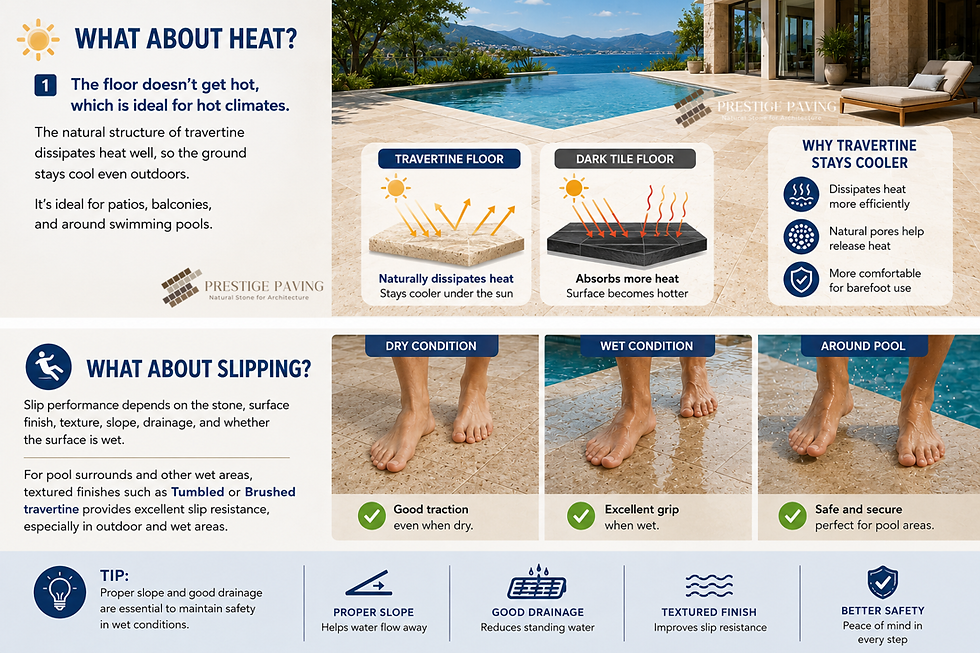
What About Heat?
The floor doesn't get hot, which is ideal for hot climates. The natural structure of travertine dissipates heat well, so the ground stays cool even outdoors. It's ideal for patios, balconies, and around swimming pools.
What About Slipping?
Slip performance depends on the stone, surface finish, texture, slope, drainage, and whether the surface is wet. For pool surrounds and other wet areas, textured finishes such as Tumbled or Brushed travertine provides excellent slip resistance, especially in outdoor and wet areas.
Maintenance of Travertine
Travertine is a durable natural stone, but proper care is important to preserve its appearance and performance over time.
Regular cleaning: Use a pH-neutral cleaner and a soft cloth, mop, or sponge to remove everyday dirt without damaging the stone.
Stain and moisture protection: Apply a suitable penetrating sealer to help reduce water absorption, staining, and moisture penetration.
Repair and restoration: Small holes, chips, or surface imperfections can be repaired using a suitable colour-matched grout or stone repair filler.
Avoid acidic cleaners: For travertine bathrooms, kitchens, floors, and other interior surfaces, avoid harsh or acid-based cleaning products, which can etch and damage the stone.
Choose filled travertine for high-use surfaces: Filled travertine is often a practical option for horizontal surfaces such as floors and kitchen areas because the filled pores provide a smoother surface that is easier to clean and maintain.
Why Choose Travertine?
Travertine offers a combination that is difficult to reproduce with manufactured materials: natural variation, warm colour, texture, and a sense of history.
With the right stone, finish, installation method, and maintenance, travertine can work beautifully in both traditional and contemporary spaces. From a Mediterranean courtyard to a tropical poolside terrace in Thailand, it provides a natural surface that feels elegant without appearing overly formal.